CASE STUDY 02Target Girls wear
Reimagining the range
Creative Direction / Range strategy / Commercial Design
The Challenge : transforming fragmented girls wear offering a cohesive, commercially relevant collection
The insight: An assortment of individual statement pieces lacked a consistent design identity, limiting outfitting opportunities and making the range harder to shop.
The approach: Rebuilding the range's aesthetic DNA through a clearer design direction, coordinated colour palettes, considered fabrications and a stronger balance of fashion and core products.
The solution: A more cohesive girls wear collection designed around complete outfits, improved seasonal flow and commercially relevant product choices. Consolidating key fabrics, yarns and colours also supported sourcing efficiencies.
The impact: Stronger range cohesion, improved shopability and greater opportunities for multiple purchases, while supporting commercial performance and sell-through.
FROM CREATIVE DIRECTION TO COHESIVE RANGES
The seasonal theme boards establish the creative direction, defining the colour palette, key trends, fabrications and overall aesthetic.
This direction is then translated across the entire range, connecting core lines, fashion basics and seasonal categories such as swimwear into one cohesive product story.
Considered colour, print, fabrication and styling choices create natural outfitting opportunities, offering customers choice across styles and price points while making the range easy to shop.
Equally important is the flow from month to month. Each new collection builds on the last, maintaining continuity and cohesion across the shop floor while introducing fresh colours, trends and product stories that give customers a reason to return.
This considered approach to range planning balances newness with continuity, supporting stronger sell-through, multiple purchases and a consistent brand identity.
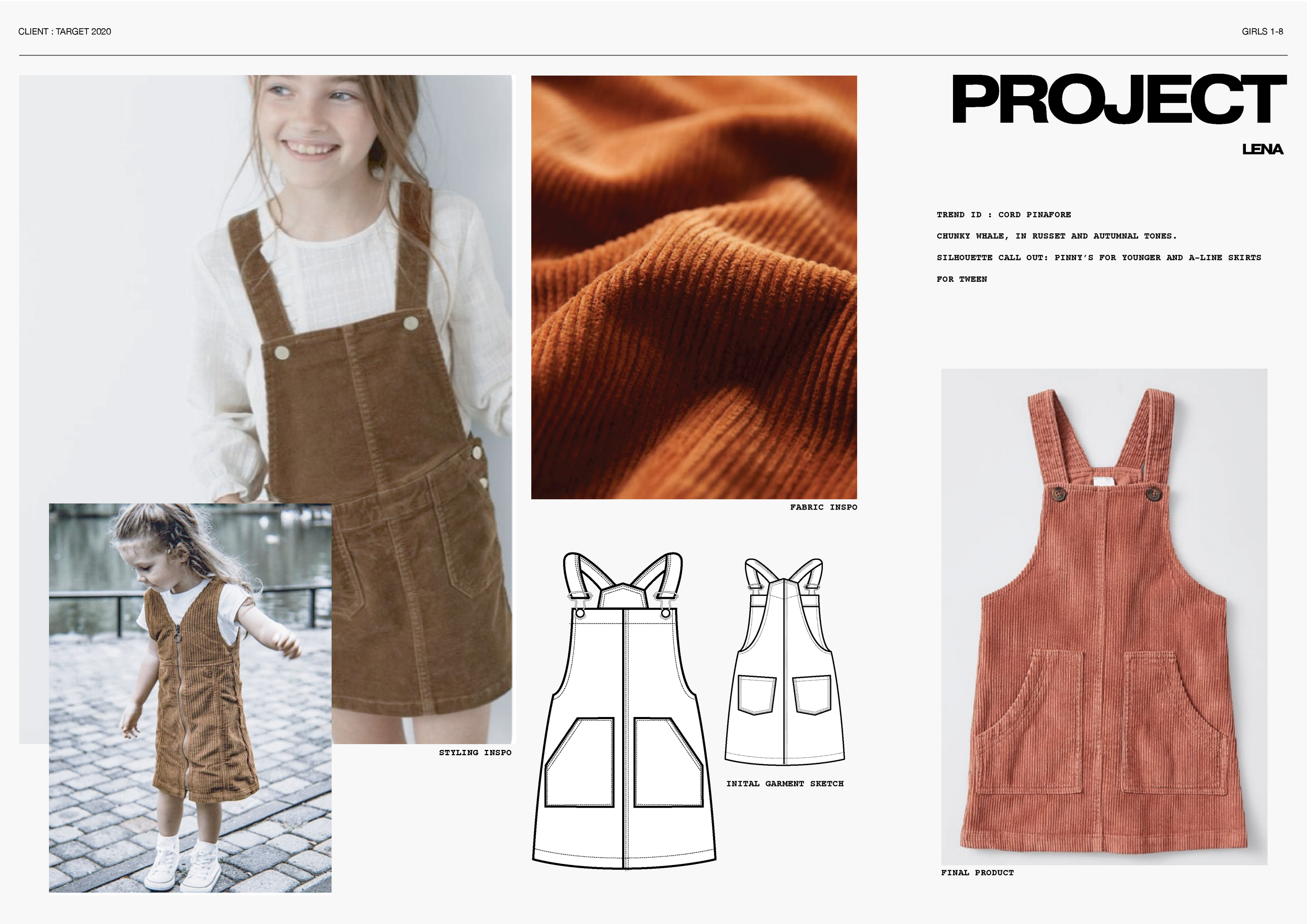
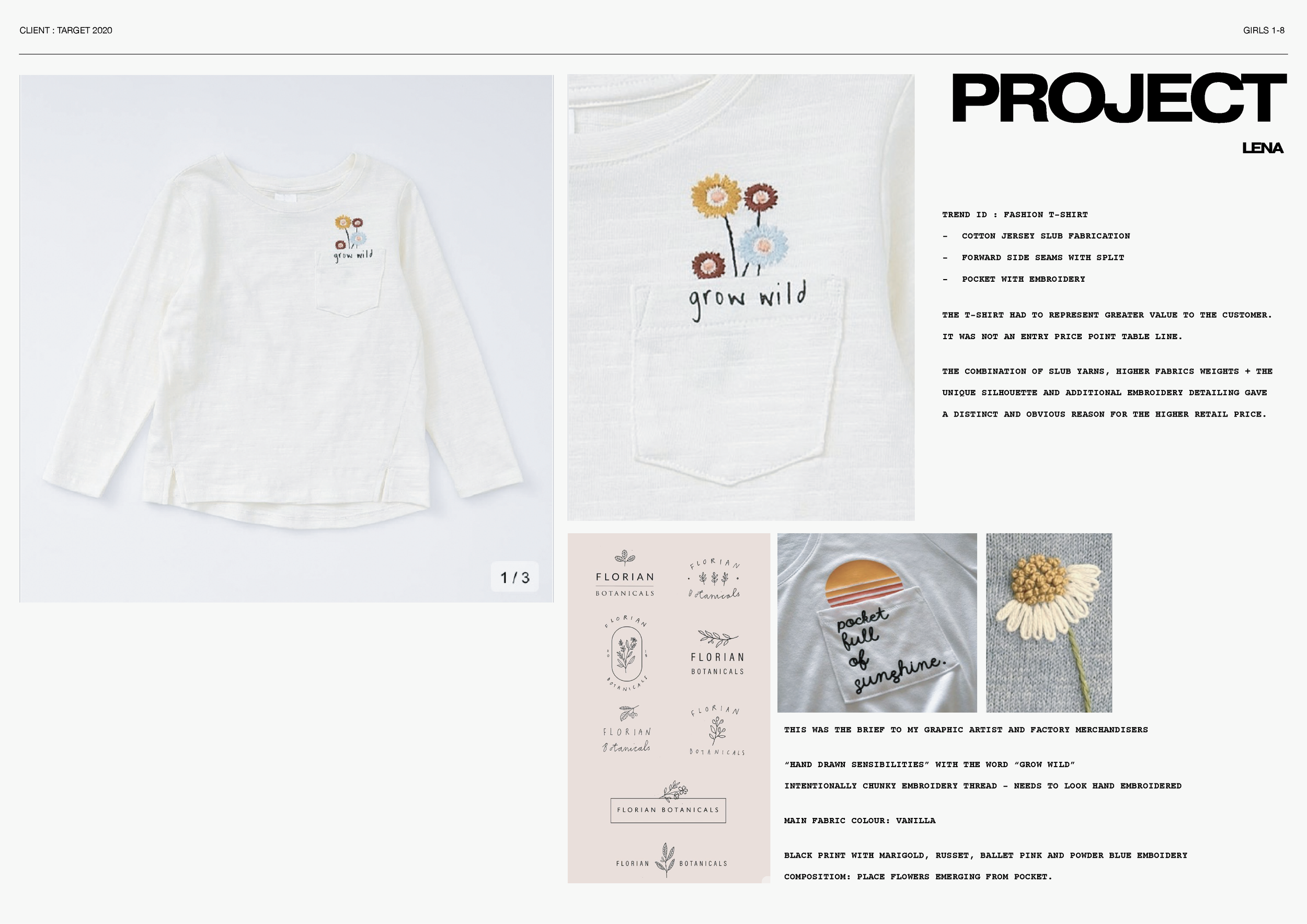
FROM INSPIRATION TO PRODUCT DEVELOPMENT
Translating emerging trends and design inspiration into commercially relevant products requires both creative vision and technical understanding.
These examples demonstrate how I take an initial idea through to product development, refining silhouettes, fabrications, colours, graphics and detailing to align with the broader range direction.
This includes briefing graphic artists on artwork and embroidery, working directly with manufacturers to source suitable raw materials, coordinating lab dips and developing construction details to achieve the desired aesthetic, quality and price point.
The result is considered, commercially viable product that captures the original design intent while integrating seamlessly into the wider collection.